Select your language


News archive
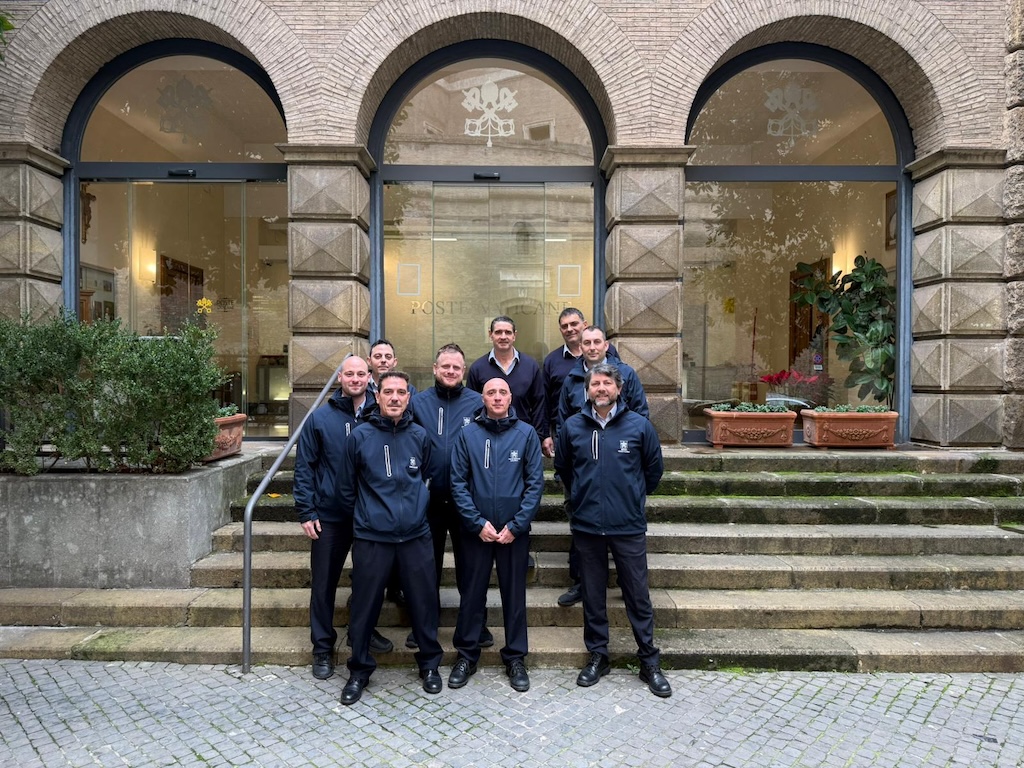
In Conversation with Two Postal Workers for the Governorate in Vatican City
When the Recipient of Mail is the Holy Father
Responsibility, confidentiality, discretion. These are the essential qualities required when delivering correspondence to the Pope and to the various Dicasteries of the Roman Curia, as well as to the offices of the Governorate. They are the defining traits of those entrusted each day with delivering mail within Vatican City.
In this interview, Valentino Nardocci and Andrea Antognetti — respectively the longest-serving and the youngest postmen of the Postal and Philately Service of the Directorate of Telecommunications and Information Systems of the Governorate — speak about their work.
What does a typical day look like when delivering mail in the Vatican?
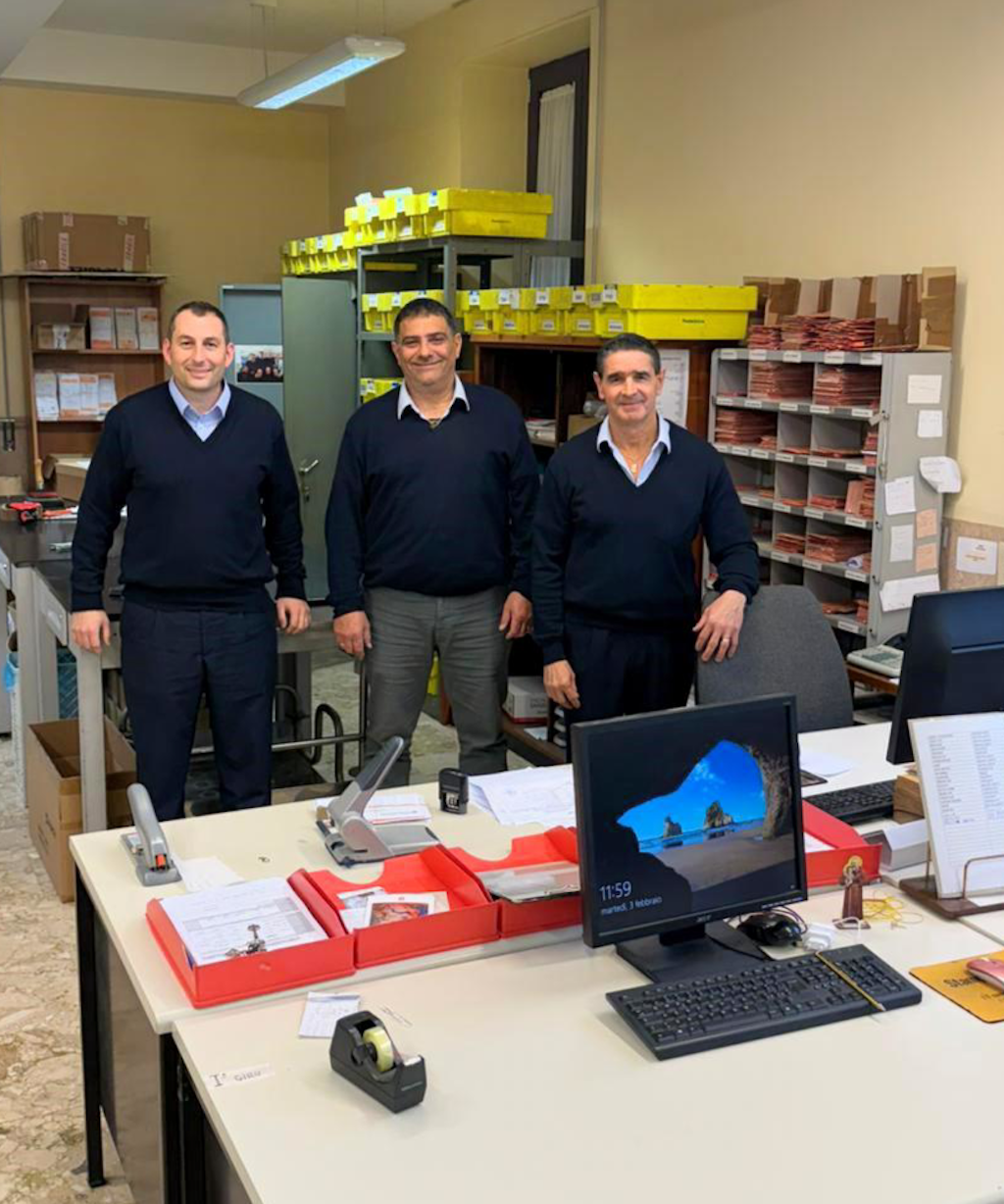
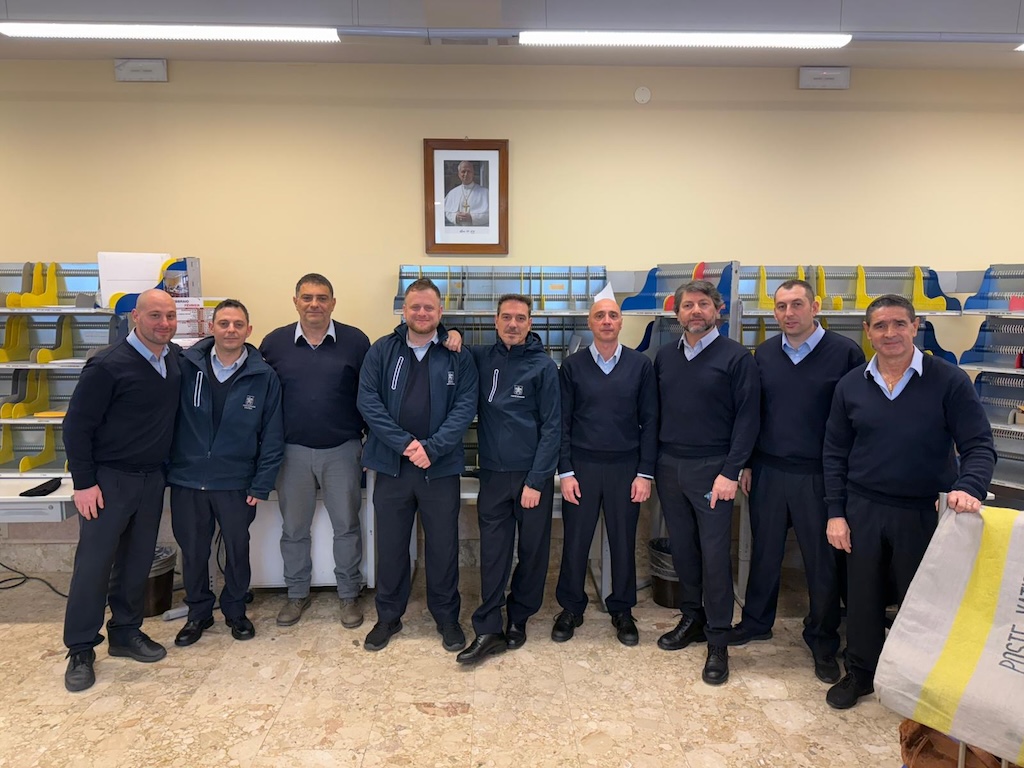
Our working day begins at 7:00 a.m. in the holding center with the sorting of newspapers and mail which arrived the previous evening. Once this phase is completed, we prepare the correspondence destined for the Dicasteries located in extraterritorial areas outside the Vatican served by the Vatican Post Office. After that, two mail carriers leave to deliver it while those who remain on site check the mail and prepare internal deliveries inside the Vatican.
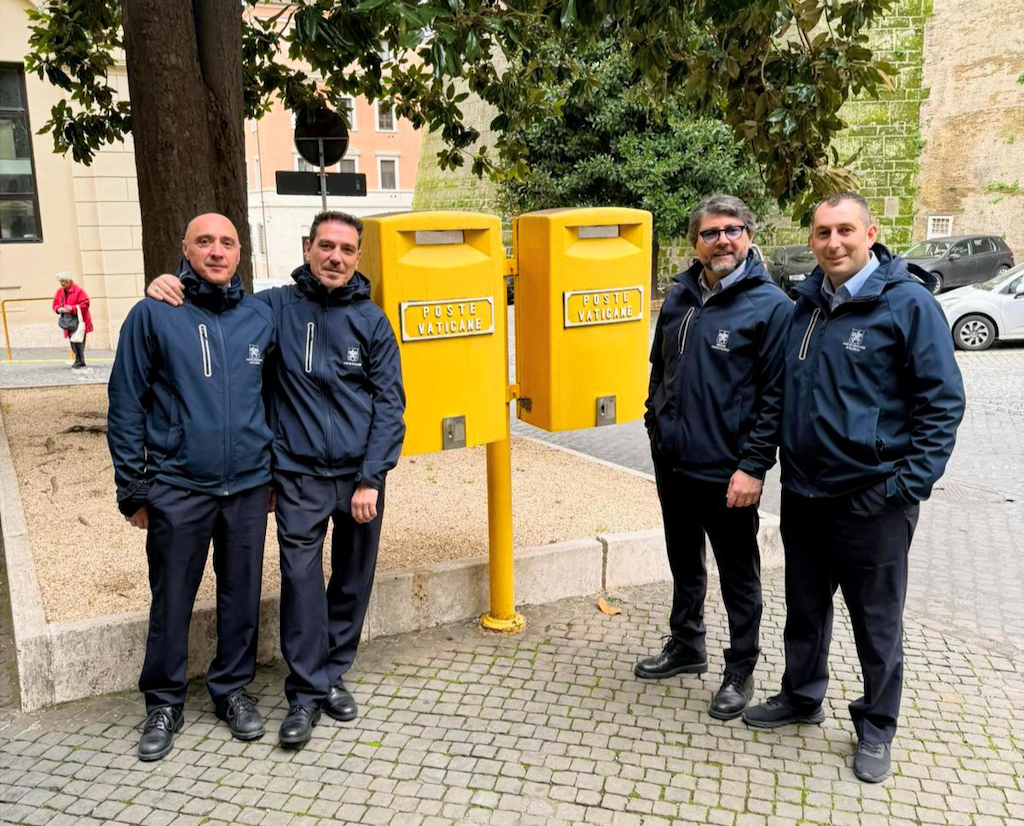
Within Vatican City, we follow three distinct routes, each organized according to a different area of responsibility. There are two delivery rounds per day. During waiting times, we remain available to the shift supervisor to handle additional tasks such as parcel delivery, scanning goods, or managing the “poste restante” service.
After returning from the second round, we wait for the arrival of mail entering through Italy and sort the correspondence for the Dicasteries that must be delivered during the afternoon round. The morning shift ends at 1:00 p.m., while the afternoon shift runs from 12:00 p.m. to 6:00 p.m.
What are the main logistical challenges?
The greatest challenge concerns deliveries to external Dicasteries, mainly because of unpredictable traffic, as some offices are located in the Rome city center. However, even internal service can present complexities: official receptions, visits to the Holy Father, or visits by other dignitaries often lead to sudden changes, waiting times, or route deviations directed by the Gendarmerie and the Pontifical Swiss Guard.
Do you have access to places normally closed to the public?
Generally, yes. Our uniform and identification badge allow us access to certain places not usually open to the public. However, access is never automatic and always depends on the current security provisions.
How strict is the security protocol?
Security checks within the Vatican are very rigorous. Even though faces become familiar over the years, inspections are always careful and thorough, and it is mandatory to have one’s identification badge ready to present at all times.
Are there particular rules to follow during deliveries?
The fundamental rule is confidentiality. Mail is private and must be handled with the utmost care. For this reason, much of the correspondence is placed in sealed postal bags under our close supervision, ensuring security and discretion at every stage of delivery.
Do you often deliver letters addressed directly to the Pope?
Yes, quite often. About 70% of the correspondence is addressed to the Holy Father, which requires an especially high level of attention and care.
Are there special procedures for “sensitive” or official mail?
Yes, there are well-defined procedures for all mail addressed to the highest offices of the Vatican. This type of correspondence requires the utmost care and is handled with additional security measures, confidentiality, and absolute respect for the recipients. Each phase is governed by strict protocols. Our task is to safeguard and accompany these messages, aware that they are not merely simple documents.
Do you notice peaks in correspondence at certain times?
Certainly. During Christmas and Easter, for example, there is a significant increase in correspondence, both in the sending of letters and greeting messages and in the shipment of goods. Other increases may occur throughout the year during special events or significant occasions such as celebrations, appointments, or birthdays. A particularly emblematic case was the recently concluded Jubilee Year, during which the increase in pilgrims from all over the world led to a considerable rise in mail addressed to the Holy Father and to Vatican Institutions. It is especially at these times that correspondence becomes a tangible expression of participation and spiritual closeness to the Church, giving our service an even deeper and more intense meaning.
How important is your service to the functioning of the smallest state in the world?
The Vatican postal service plays an essential role in the functioning of the State of Vatican City. Although it is the smallest state in the world, the Vatican is the seat of the Roman Curia, in the service to the universal Church. In this context of particular institutional importance, it is necessary to ensure constant and reliable connections, going far beyond mere logistical function. The postal service thus becomes a genuine instrument of communion, assisting the daily mission of the Holy See.
Do you feel like “postal workers as any others,” or a bit like ambassadors?
Although our work is similar to that of many colleagues, our daily interaction with our unique clientele leads us to perceive our role as something that goes beyond that of a simple mail carrier. Outside the Vatican walls, we represent an institution — a responsibility that makes us deeply aware of the duties that accompany our work and of the image we convey.
What does it mean for you to work in such a symbolic place?
Working in the Vatican means operating daily in the historic heart of Christianity, a unique place where faith and history meet. Being part of this reality is a privilege, even offering a unique opportunity for both human and spiritual growth. It encourages respect and full awareness of the profound value of what we safeguard. In our own small way, we feel that we contribute to the mission of the Church, and the inner enrichment that follows affects not only us but, thankfully, also our families.